 English
 Deutsch
 Polski
 Français
 Română
 czeski
 Español
 Italiano
If the Great Pyramids of Giza represent the ancient soul of Egypt, Al-Muizz Al-Deen Allah Street (commonly known as Al-Muizz Street) represents its beating medieval heart. Stretching from the northern gate of Bab Al-Futuh to the southern gate of Bab Zuweila, this single kilometer of pavement offers the highest density of significant Islamic monuments found anywhere in the world.
Walking down Al-Muizz is not merely a stroll through a neighborhood; it is a journey through a thousand years of history. From the Fatimids who founded Cairo to the Mamluks who defended it and the Ottomans who later ruled it, every stone on this street tells a story of empires, intrigue, architectural brilliance, and religious devotion.
This guide explores the history, the must-see landmarks, and the hidden secrets of Al-Muizz Street, providing essential tips for the modern traveler looking to uncover the treasures of Islamic Cairo.
The History: A Street Built for Caliphs
To understand Al-Muizz Street, one must look back to 969 AD. Egypt had been under the rule of the Ikhshidids, vassals of the Abbasid Caliphate in Baghdad. However, high taxes and famine had weakened the region, leaving it vulnerable. Enter the Fatimids.
Originating from present-day Tunisia, the Fatimids were a Shi’a dynasty seeking to rival the Sunni Abbasids. When their general, Jawhar al-Siqilli, conquered Egypt, he didn't just take over the existing capital of Fustat; he built a new, royal enclosure exclusively for the Caliph and his court. He named it Al-Qahira (The Victorious), the name from which "Cairo" is derived.
The Foundation of Al-Qahira
The Fatimid Caliph Al-Muizz li-Din Allah arrived to claim his new capital, and the main thoroughfare was named in his honor. For centuries, this street was the spine of the city. It was here that the Caliph would parade; it was here that the great palaces stood (giving the area its historic name Bayn al-Qasrayn, or "Between the Two Palaces").
A Layered Legacy
While the Fatimids laid the foundation, the street’s current appearance is a tapestry of subsequent dynasties. When the Sunni Ayyubids (under Saladin) and later the Mamluks took control, they sought to erase the Shi’a influence of the Fatimids. However, rather than destroying the street, they built over it. They replaced Fatimid palaces with sunni Madrasas (religious schools), Mausoleums, and hospitals. The Ottomans later added their own architectural flair.
The Southern Section: From Al-Azhar to Bab Zuweila
Crossing the busy Al-Azhar Street takes you to the southern leg of Al-Muizz. This area is grittier, busier, and allows cars, but it holds equal historical weight.
The Ghouriyya Complex (El Ghorya)
Standing like a gateway to the southern section is the massive complex of Sultan Al-Ghuri, the last powerful Mamluk Sultan before the Ottoman conquest.
The complex is unique because it straddles both sides of the street. On one side is the mosque/madrasa, and on the other is the mausoleum and sabil (water dispensary). A wooden roof originally connected the two, covering the street below and creating a shaded marketplace.
The Tragedy: Sultan Al-Ghuri built a magnificent mausoleum for himself, but he was never buried there. He died in battle against the Ottomans
in Syria, and his body was never recovered. The mausoleum remains a beautiful, empty cenotaph.
Wekalet El-Ghouri: Nearby is the Wekala (merchant’s inn), which today hosts the famous Tanoura Dance (Egyptian Whirling Dervishes) shows.
Bab Zuweila
The street terminates at Bab Zuweila, the southern gate of the Fatimid city. This gate is steeped in bloody history. It was the site of public executions; the heads of criminals and political enemies were often displayed on spikes above the gate to warn the populace. Most famously, the last independent Mamluk Sultan, Tuman Bay, was hanged here by the Ottomans in 1517, marking the end of the Mamluk Empire.
The View: Despite its gruesome history, Bab Zuweila offers perhaps the best view in all of Cairo. Visitors can climb the minarets of the adjacent
Mosque of Al-Muayyad Sheikh, which are built on top of the gate towers. From here, you can see the entire length of Al-Muizz Street stretching north, the Citadel to the east, and the chaotic beauty of Old Cairo all around.
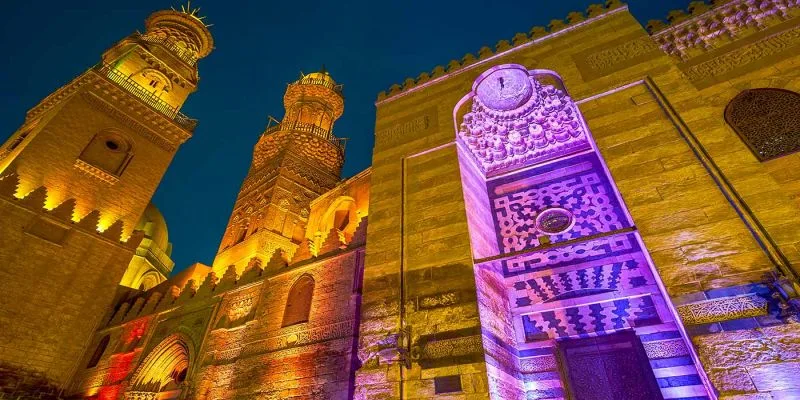
Where is Al-Muizz Street located exactly?
Al-Muizz Street is located in the district of Islamic Cairo (technically Gamaleya). It runs parallel to the main Port Said Street. The most popular starting point is the northern end near Al-Hussein Mosque and Al-Azhar Mosque, or entering through the Bab Al-Futuh gate.
- If using Uber, set your destination to "Bab Al-Futuh" to walk North-to-South, or "Al-Azhar Mosque" to start in the middle.
Whispers in the Walls: Myths and Legends of Al-Muizz
History is not just facts; it is also the folklore that breathes life into the stones. Al-Muizz Street is teeming with local legends that have been whispered in tea houses for centuries.
The Healing Column of Qalawun
Inside the Complex of Qalawun, there are massive granite columns taken from ancient Egyptian temples. For centuries, a local legend persisted that one of these columns possessed healing powers. Locals suffering from jaundice or fevers would lick a lemon and rub it against the stone column, believing the residue of the saintly Sultan would cure them. While the practice is discouraged today to preserve the monument, you can still see the wear on the stone from thousands of hopeful hands.
The Spirit of "Mitwalli"
At Bab Zuweila, local superstition speaks of a benevolent spirit known as Qutb Al-Mitwalli. It was believed that this holy spirit lived behind the massive wooden door of the gate. For generations, people would hammer a nail into the wood or hang a piece of fabric and a tooth on the gate to ask the spirit for help with a sickness or a problem. If you look closely at the ancient wood of Bab Zuweila, you can still see the marks of these desperate prayers.
The Foundation of Al-Qahira
The Fatimid Caliph Al-Muizz li-Din Allah arrived to claim his new capital, and the main thoroughfare was named in his honor. For centuries, this street was the spine of the city. It was here that the Caliph would parade; it was here that the great palaces stood (giving the area its historic name Bayn al-Qasrayn, or "Between the Two Palaces").
A Layered Legacy
While the Fatimids laid the foundation, the street’s current appearance is a tapestry of subsequent dynasties. When the Sunni Ayyubids (under Saladin) and later the Mamluks took control, they sought to erase the Shi’a influence of the Fatimids. However, rather than destroying the street, they built over it. They replaced Fatimid palaces with sunni Madrasas (religious schools), Mausoleums, and hospitals. The Ottomans later added their own architectural flair.
Today, Al-Muizz Street is a UNESCO World Heritage treasure where you can see a Fatimid mosque next to a Mamluk madrasa and an Ottoman house, all within a few meters of each other.
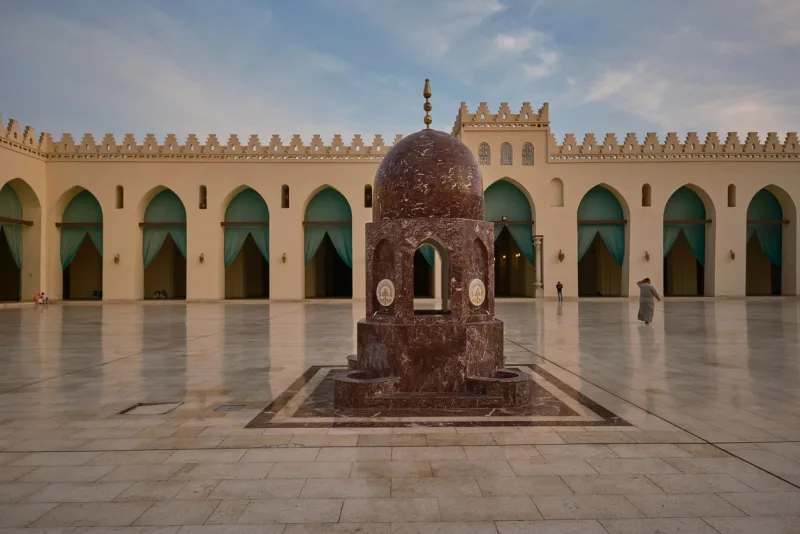
Can I visit Al-Muizz Street at night?
Yes! In fact, many locals prefer it. The monuments are lit up (creating amazing photography opportunities), the heat of the day has dissipated, and the cafes are bustling. However, note that the interiors of the ticketed monuments usually close by 5:00 PM.
The Northern Section: From Bab Al-Futuh to Al-Azhar
The street is generally divided into two sections by the bustling Al-Azhar Street. The Northern section is pedestrian-only during the day and contains the most famous renovated monuments.
Al-Aqmar Mosque (The Moonlight Mosque)
One of the most architecturally significant buildings on the street is the Al-Aqmar Mosque. Built in 1125 AD, it is one of the few remaining Fatimid monuments that gives us a glimpse of the dynasty's elegance before Mamluk domination.
Why it matters: Al-Aqmar is famous for a specific architectural innovation: the offset façade. In Islamic architecture, the interior of a mosque
must face Mecca (the Qibla). However, this often clashes with the layout of the existing street. The architects of Al-Aqmar designed a façade that aligned perfectly with the street line, while the interior was angled to face Mecca. This ingenious solution became a standard in Cairo’s urban planning. The façade itself is stunning, carved with a ribbed shell hood and inscriptions in Kufic script, resembling the glow of the moon (Al-Aqmar), hence its name.
Bayt Al-Suhaymi: A Masterpiece of Domestic Life
Just a few meters off the main thoroughfare, down a side alley known as Darb Al-Asfar, lies Bayt Al-Suhaymi. While mosques and madrasas dominate the main street, this house offers a rare glimpse into how the wealthy lived in 17th-century Cairo.
Built in 1648 (with additions in 1796), this house is an exquisite example of Ottoman domestic architecture. It is designed around the concept of privacy and climate control:
- The Salamlik: The public reception area for male guests.
- The Haramlik: The private quarters for women and family.
- Mashrabiya: The house is famous for its intricate wooden lattice windows (mashrabiya). These allowed cool air to enter and women to look out onto the street without being seen from the outside.
Walking through its courtyards, filled with greenery and fountains designed to cool the air, you are transported to a time of slow, luxurious living away from the dust of the medieval city.
The Complex of Sultan Qalawun
If Al-Muizz Street has a crown jewel, it is the Complex of Sultan Al-Mansur Qalawun (built in 1284). This massive structure includes a mosque, a madrasa, a mausoleum, and formerly, a maristan (hospital).
- The Gothic Connection: Qalawun was a Mamluk Sultan who spent years fighting the Crusaders. Interestingly, the architecture of his complex shows clear influence from the Crusader churches he encountered. The windows of the façade are distinctly Gothic in style, a rare sight in Islamic architecture.
- The Mausoleum: The interior of the mausoleum is often described as the second most beautiful in the Islamic world, surpassed only by the Taj Mahal. The walls are covered in marble inlay and intricate stucco, and the space is illuminated by stained glass that casts a kaleidoscopic light over the tomb.
- The Hospital: The maristan was once one of the most advanced hospitals in the world, treating patients for free regardless of religion or social status. It even had sections for treating mental illness with music and water therapy—centuries before such concepts existed in Europe.
The Atmosphere: Craftsmen and Chaos
Al-Muizz Street is not a sterile museum. It is a living, breathing neighborhood. As you walk, you will pass the Coppersmiths' Market (Nahassin), where men still bang sheets of metal into pots and lanterns, the sound ringing off the 800-year-old stone walls.
The street is the western border of the famous Khan el-Khalili market. Halfway down the street, you can duck into side alleys that lead you into the labyrinth of the Khan, where spices, perfumes, gold, and textiles have been sold since the 14th century.
The area was immortalized by Egyptian Nobel Laureate Naguib Mahfouz in his Cairo Trilogy. His novel Palace Walk is named after this very street (Bayn al-Qasrayn). Walking here is walking through the pages of literature and history simultaneously.
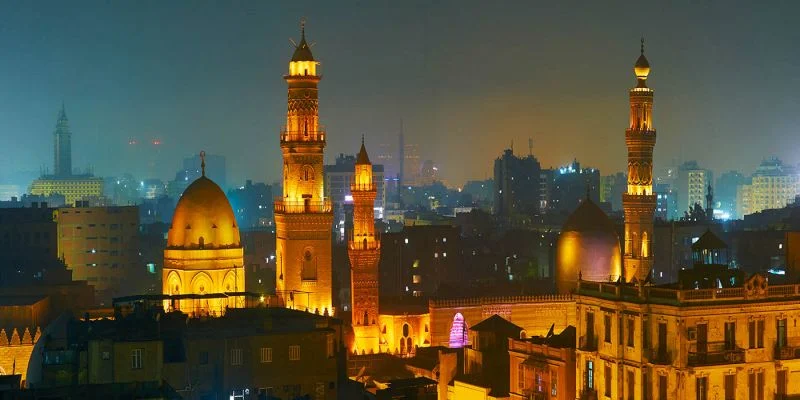
Do I need a guide for Al-Muizz Street?
While you can walk it alone, a guide is highly recommended. The history here is dense, and there is very little signage in English explaining the difference between a Mamluk Madrasa and a Fatimid Mosque. A specialized guide can unlock the stories behind the stones.
Essential Tips for Visiting Al-Muizz Street
To ensure your visit is smooth and enjoyable, keep these local tips in mind.
1. Timing is Everything
Daytime (9 AM - 4 PM): Best for entering the monuments. Mosques and houses like Bayt Al-Suhaymi close around 4 or 5 PM.
Nighttime (6 PM - 10 PM): Best for atmosphere. The monuments are illuminated with beautiful floodlights. While you can't enter inside most tombs at night, the street comes alive with locals, cafes, and music. It is magical and safe.
2. The Dress Code
This is a conservative area and a place of worship.
Men: Wear long trousers. T-shirts are fine, but avoid tank tops.
Women: Wear loose-fitting clothes that cover shoulders and knees. Carrying a lightweight scarf is highly recommended; you will need to cover your hair to enter the active mosques (though not for the street itself or non-religious sites like Bayt Al-Suhaymi).
3. Tickets and Passes
You do not need a ticket to walk the street. However, entering the specific monuments (like Qalawun or Bayt Al-Suhaymi) requires tickets.
Pro Tip: Buy the "Combined Ticket" for Al-Muizz Street at the booth near the Qalawun Complex. It grants access to multiple sites along the street for a fraction of the cost of buying individual tickets.
4. Footwear
Wear your most comfortable shoes. The street is paved with stone, which can be uneven. Furthermore, you will be taking your shoes off repeatedly to enter mosques. Slip-on shoes are a lifesaver here.
5. Managing the Hustle
You will be approached by shopkeepers and touts. This is part of the culture. A polite but firm "La, Shukran" (No, thank you) is usually enough. Keep walking, and don't feel obligated to stop at every shop.
Is Al-Muizz Street safe for tourists?
Yes, Al-Muizz Street is very safe. It is a pedestrian-friendly zone (in the northern part) with a strong police presence due to its status as a major tourist site. It is also a popular hangout for Egyptian families in the evenings. As with any crowded area, keep an eye on your pockets, but violent crime is extremely rare.
How much time do I need to see Al-Muizz Street?
To simply walk the street takes about 30 minutes. However, to truly experience it—entering the Qalawun Complex, visiting Bayt Al-Suhaymi, climbing Bab Zuweila, and stopping for tea—you should allocate 3 to 4 hours.
Is Al-Muizz Street the same as Khan el-Khalili?
Not exactly, but they are connected. Al-Muizz is the main north-south historical spine lined with monuments. Khan el-Khalili is the sprawling market district that branches off the eastern side of Al-Muizz Street. You can easily walk between them; they are essentially the same neighborhood but serve different purposes (sightseeing vs. shopping).
What is the best way to get to Al-Muizz Street?
- Uber/Careem: The easiest and most stress-free method.
- Metro: Take the Cairo Metro Line 3 to Bab El Shaaria station. From there, it is a 10-15 minute walk to the Bab Al-Futuh entrance of the street.
What should I eat near Al-Muizz Street?
- You are in the heart of traditional Cairo.
- Try Egyptian Pancakes (Feteer) at the local shops.
- Visit the famous Naguib Mahfouz Cafe (run by Oberoi hotels) for a high-end, clean, and atmospheric meal inside the Khan.
- Grab a sugar cane juice from the vendors near Bab Zuweila for an energy boost.